The global financial ecosystem has undergone a major transformation over the last decade. Physical cash, paper-based instruments, and in-person banking processes are rapidly being replaced by digital systems that enable fast, secure, and remote financial transactions. At the core of this shift is the money transfer app, a foundational component of modern digital payments and financial technology (fintech).
This guide provides a clear, practical, and in-depth explanation of money transfer apps—what they are, how they work, where they are used, and why they play a critical role in today’s digital economy.
What Is a Money Transfer App?
A money transfer app is a digital application that allows users to send, receive, and manage funds electronically through mobile devices or web platforms. These apps connect users to banking systems, payment networks, or wallet infrastructures to enable secure financial transactions without the need for physical cash or in-branch visits.
Money transfer apps are designed to simplify financial interactions by prioritizing:
- Speed of transactions
- Ease of access
- User-friendly interfaces
- Real-time or near-real-time settlements
They are used by individuals, businesses, and institutions for both domestic and international payments.
Why Money Transfer Apps Matter in the Modern Economy
Money transfer apps are no longer optional tools; they are essential infrastructure in digitally connected economies. Their importance stems from multiple global and technological shifts, including:
- Rapid growth in smartphone and internet adoption
- Expansion of digital banking and fintech services
- Demand for instant and low-cost payments
- Rise of cross-border work, trade, and remittances
- Increased focus on financial inclusion
In many regions, money transfer apps serve as the primary interface for everyday financial activities, especially for users who have limited access to traditional banking services.
Common Use Cases of Money Transfer Apps
Money transfer apps support a wide range of real-world financial scenarios. Across industries and user segments, money transfer apps are applied in areas such as:
1. Peer-to-Peer (P2P) Payments
Users can instantly send money to friends, family members, or contacts using mobile numbers, usernames, or email addresses. This is widely used for shared expenses, personal transfers, and emergencies.
2. Domestic Bank Transfers
These apps enable fast transfers between bank accounts within the same country, often completing transactions in seconds or minutes instead of days.
3. International Money Transfers
Money transfer apps are frequently used for cross-border remittances, offering lower fees, faster settlement times, and better transparency compared to traditional international bank transfers.
4. Bill Payments and Recurring Expenses
Many apps allow users to pay utility bills, mobile recharges, insurance premiums, and subscription services directly from a single platform.
5. Business and Merchant Transactions
Small businesses, freelancers, and merchants use money transfer apps to receive payments, manage cash flow, and maintain transaction records without complex infrastructure.
How a Money Transfer App Works (Step-by-Step Overview)
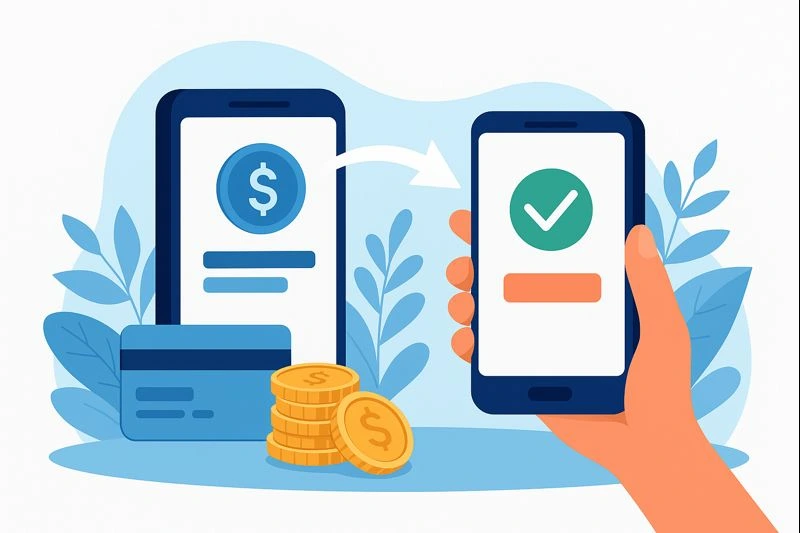
Although the backend systems are technically complex, the core working of a money transfer app can be explained through a simple flow:
Step 1: User Registration and Identity Verification
Users create an account using a mobile number or email address. To comply with financial regulations, most apps require identity verification through Know Your Customer (KYC) processes.
Step 2: Linking a Payment Method
Users link one or more funding sources such as bank accounts, debit cards, credit cards, or digital wallets.
Step 3: Transaction Initiation
The sender enters the recipient details, transfer amount, and payment method. The app validates balances and transaction permissions.
Step 4: Transaction Processing
The transaction is routed through payment gateways, banking rails, or wallet networks depending on the transfer type and geography.
Step 5: Settlement and Confirmation
Once processed, funds are credited to the recipient, and both parties receive real-time transaction confirmation.
In most modern systems, this entire process is completed within seconds.
Money Transfer Apps vs Digital Wallets: Key Differences
People often treat them as the same, but there are important differences.
- Money transfer apps primarily focus on sending and receiving funds between users or accounts.
- Digital wallets store balances and may also hold rewards, loyalty points, or payment instruments.
Some platforms combine both features, but understanding the distinction is important from a functional and regulatory perspective.
Security Measures in Money Transfer Apps
Security is a critical trust factor in financial technology. Money transfer apps implement multiple layers of protection to safeguard user funds and sensitive data, including:
- End-to-end data encryption
- Multi-factor authentication (MFA)
- Secure APIs and tokenization
- Real-time transaction monitoring
- Fraud detection and risk analysis systems
By implementing these layers, platforms strengthen defenses against security threats and system vulnerabilities.
Regulatory and Compliance Requirements
Money transfer apps operate within a highly regulated environment. Depending on the country or region, they must comply with:
- Anti-Money Laundering (AML) regulations
- Know Your Customer (KYC) laws
- Data privacy and protection standards
- Payment industry and financial reporting requirements
Regulatory compliance is essential not only for legal operation but also for maintaining user trust and long-term sustainability.
Role of Money Transfer Apps in the Fintech Ecosystem
Money transfer apps form the backbone of the fintech ecosystem by enabling:
- Faster and more efficient payments
- Greater access to financial services
- Integration with banking, lending, and investment platforms
- Growth of digital commerce and online marketplaces
They often act as entry points for users into broader financial ecosystems.
Industry Evolution and Future Outlook
The money transfer app industry continues to evolve as technology and user expectations advance. Key trends shaping the future include:
- Real-time and instant payment networks
- API-driven financial services
- AI-powered fraud detection and compliance
- Improved cross-border payment infrastructure
As digital finance expands, money transfer apps will remain central to innovation in global payments.
Conclusion
Money transfer apps have fundamentally changed how money moves in a digital-first world. By offering speed, convenience, and security, they have become essential tools for individuals, businesses, and financial institutions alike.
Understanding how money transfer apps work—and their role in the broader fintech ecosystem—is increasingly important as digital payments continue to define the future of finance.